

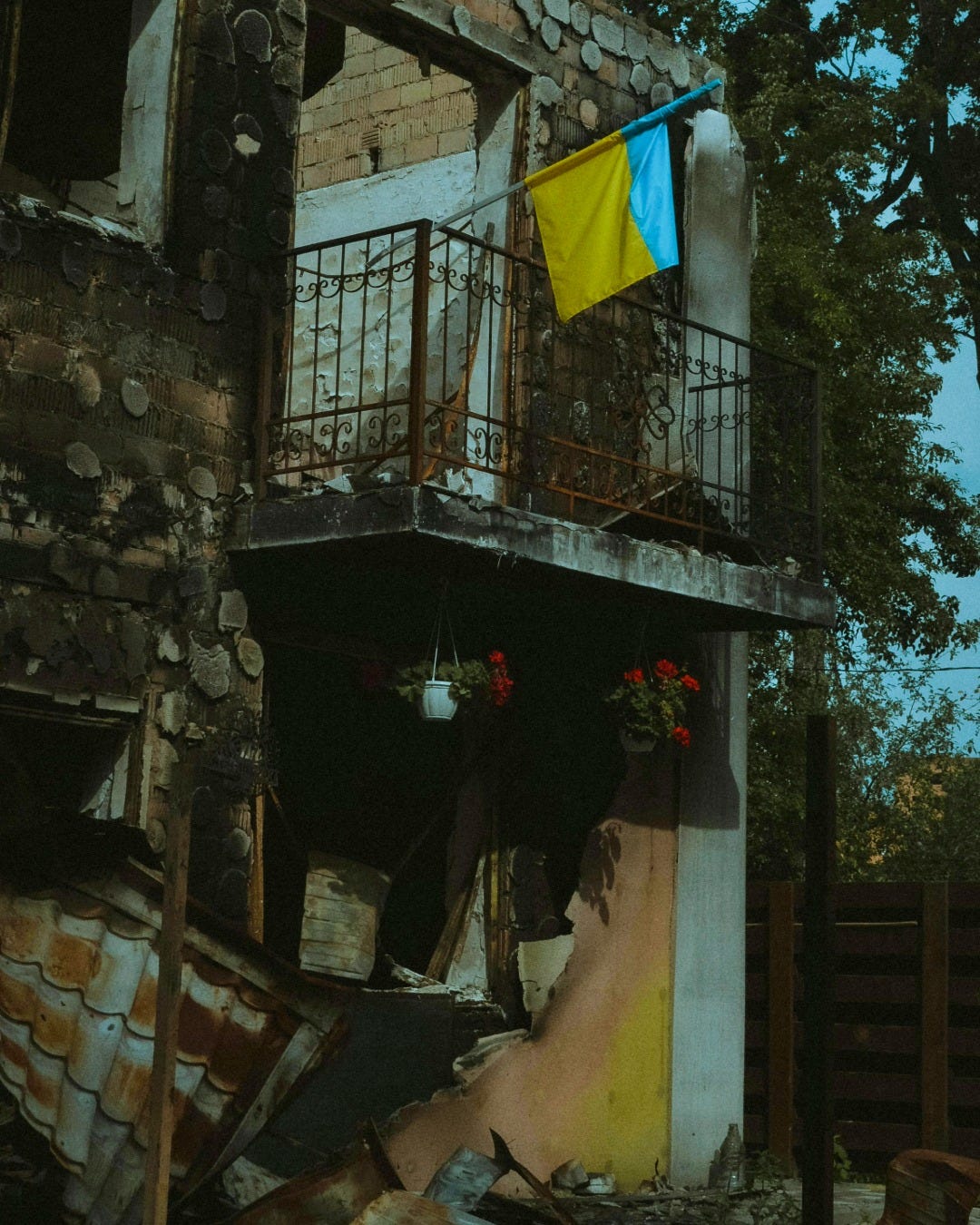
The first thing I think about is not the backpack.
The cat.
She’s always the first to notice that something is wrong. She follows me from room to room with that resentment animals have when they sense humans are doing something pointless and alarming again. I take out the carrier, and she immediately starts hissing. The backpack drops to the floor. The zipper opens with a dry, scratching sound. Only then do I start choosing.
On the stairs I hear footsteps. The neighbor from the third floor comes out with bags, stops, looks at me, at the carrier.
“Packing again?”
“Yes.”
She nods as if that’s a normal answer and walks on. As if the backpack, the cat, and the half-packed room are also just routine, something one can get used to.
My phone blinks with a message from Mom: “Did you take your meds?” I write “yes.” That’s not entirely true. The meds are still on the table, but they’ll be the first to go in.
You pack for trips differently, lighter. You can be someone else for a bit, imagine that life folds and unfolds without loss. Here it’s not like that. It’s more like a conversation with time, in which you’ve already lost a little before it begins. You take what you can carry and stand in the middle of the room, not quite knowing where to start. The walls are silent, already half-foreign.
The backpack is always too small for what I call home. If it were bigger, I’d start lying to myself: I’d pack extras, stuff it with junk, trying to save everything. As it is, it forces me to be honest. Even when that honesty hurts.
First, the simplest things. What survival instinct dictates. Medicine that sometimes makes me nauseous, but without it the body will give up quickly. A phone charger that always tangles into a knot exactly when your hands are shaking. Passport. Power bank. Toothbrush. A sweater, slightly pilled by now, but it smells like calm. Socks. Just things without which the next day will become physically unbearable.
Then books.
I don’t take many. I used to think that in a moment like this I’d choose the “most important” ones, the ones that shaped how I see the world. I take the ones my hand reaches for on its own. A worn volume with a cracked spine. A book with my underlines, where an old scrap of paper has been sitting between the pages for years.
Books are heavy in a different way. Time remains in them. When I open one of them, I see exactly where I was reading it. Whether it was quiet then. Whether it was already frightening. Whether I underlined a whole paragraph, or just one line, because in that moment it said more for me than I could say myself. Sometimes I see my underlined line and suddenly remember where I was sitting when I read it, what the morning was like, whether the lights were humming, whether the blackouts had already started.
I’ve packed like this before. That time I put a spoon in the backpack and forgot warm socks. I thought it was stupid, until it turned out that the spoon really was needed. And the socks. They seemed like a small thing, but without them it was cold enough to make me angry. After that I laughed at myself for a long time. Then I stopped laughing.
I take notebooks too. It’s not sensible, but I take them anyway. They have fragments, lists, poems, phrases I wrote half-asleep. They’re not necessary the way a passport is. But if I leave them, it’s as if I’m leaving a part of myself here. In one of the notebooks there’s still an old ticket. I don’t remember where it’s from anymore. Didn’t throw it out then. Don’t throw it out now. It just lives between the pages.
Sometimes I put in a few printed images. They’re private, I almost never explain them to anyone. I don’t explain them fully even to myself. I just take them with me. There are things you don’t want to leave alone in a room.
I set a water bottle on the edge of the backpack. I take it out. It takes up space. Then put it back in. Then take it out again. A few times like this, until I admit that water matters more than another small thing.
I used to think home was a city. Then a room. Then a person. All of that was true while it lasted. But none of it fits in a backpack.
Now home is what I can take with me. Not because it’s gotten smaller. I’ve gotten smaller.
Once, during a shelling in Odesa, I felt a weight on my shoulder. Dense enough that I turned my head. There was nobody. Just a dark hallway and dust. Somewhere in the apartment above, someone was banging a door. I never told anyone this. I know what explanations you can hear here: shock, stress, tricks of the mind. Maybe. But the weight was there. It had a temperature. My body responded before I had time to think anything.
After that, packing is always a little like that state. Something in which the body knows what the mind is still afraid to name.
When the backpack is finally packed, I lift it and immediately set it back down. I check the pockets. Whether the charger is there. Whether the notebook. Whether the book. Small things, until you have to decide which of them you actually need to take.
Then I stand and look at the room. At everything that stays behind.
Here’s what nobody tells you about packing like this: you carry not only what you put in the backpack. You also carry what you had to leave behind. And that has weight too.
Before leaving I scan the room one more time. On the chair lies a sweater I’m not taking. There’s a charger still in the outlet, not the one in the backpack but another one, forgotten. On the table, a half-drunk mug of water. In five minutes I’ll close the door, and these things will stay here without me.
The cat is already angry. She’d braced her paws against the floor, as if that could stop something. She sits in the carrier like a small furious queen in exile. I take the backpack. The strap immediately cuts into my shoulder. I adjust it, though I know in a minute it’ll press into the same spot again.
Maybe that’s the most accurate definition of home I have right now: a few things I’m still able to carry.
The backpack closes. The room stays behind me. I move on, carrying only what I can.
Which is enough. For now.
Anastasia Korbet is a Ukrainian philosopher and author based in Ukraine. Her essay “The Gravity of Rubble” was recently published in Sacred Web: A Journal of Tradition and Modernity.